Evaluating Cottage Core Gingham A4 Digital Paper for Creative Projects
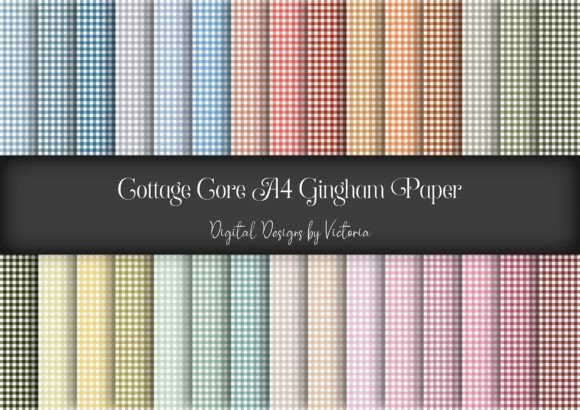
When selecting background textures for crafting or digital design, the specific aesthetic and technical format of the paper play a significant role in the final outcome. Cottage Core Gingham A4 Digital Paper represents a specific intersection of nostalgic design and practical utility. Unlike generic checkered patterns, this style focuses on soft, muted tones and traditional weaving aesthetics that evoke rural simplicity and comfort. For creators aged 20 to 50 who balance modern digital tools with traditional handcrafts, understanding the nuances of this specific collection—comprising 30 separate A4 JPG sheets—is essential for determining if it aligns with current project requirements.
This digital collection is distinct because it prioritizes color harmony over high-contrast novelty. The 30 individual sheets are designed to complement one another, allowing for cohesive multi-page projects without visual clashing. However, evaluating whether this specific set is superior to solid colors, complex florals, or vector-based alternatives requires looking at texture quality, print fidelity, and versatility across different mediums like scrapbooking, journaling, and card making.
Distinguishing Characteristics of Soft Gingham Textures
The primary differentiator of Cottage Core Gingham A4 Digital Paper is the "soft" qualifier. In design theory, standard gingham often utilizes high-saturation primaries or stark black-and-white contrasts suitable for picnic themes or retro diner aesthetics. In contrast, the cottage core variation employs desaturated palettes such as sage greens, dusty roses, warm creams, and slate blues. This reduction in visual noise makes the pattern function more like a neutral texture than a dominant focal point.
For users comparing options, this distinction matters significantly when layering elements. High-contrast patterns can compete with handwriting, stamped sentiments, or detailed photographs. The softer gingham found in this collection recedes visually, providing depth without distraction. When evaluating digital papers, consider the intended hierarchy of your layout. If the background needs to support rather than dominate, this aesthetic offers a balanced middle ground between plain cardstock and busy illustrative prints.
Format Considerations: A4 JPG vs. Vector Alternatives
A critical decision factor for many crafters is the file format. This collection provides 30 separate A4 JPG files. It is important to weigh the tradeoffs of rasterized JPEGs against vector formats (SVG/EPS) or seamless digital tiles.
- Print Readiness: A4 dimensions (210 x 297 mm) are optimized for home inkjet and laser printers. Users do not need to resize or tile images, reducing setup time for physical crafts like card bases or journal covers.
- Resolution Limits: As JPGs, these files have fixed pixel dimensions. They are excellent for printing at actual size or smaller but may lose clarity if scaled up significantly for large-format posters. Vectors remain crisp at any size but require specialized software to edit.
- Texture Authenticity: Raster formats capture subtle grain, fabric weave, and paper tooth that vectors often lack. For cottage core aesthetics, which rely heavily on tactile nostalgia, the organic imperfections preserved in a high-quality JPG are often preferable to the mathematical perfection of a vector.
- Workflow Simplicity: Separate JPG sheets allow for drag-and-drop usage in basic photo editors or word processors. There is no need to ungroup layers or manage complex artboards, making this format accessible for school crafts or casual hobbyists.
Comparative Analysis: When to Choose Gingham Over Other Styles
Crafters often deliberate between various background styles. Understanding where Cottage Core Gingham A4 Digital Paper fits within the broader ecosystem of digital assets helps prevent buyer’s remorse.
Gingham vs. Floral Botanicals
Floral patterns are synonymous with cottage core, yet they present different challenges. Detailed botanical prints can be visually heavy and may clash with other decorative elements like die-cuts or stickers. Gingham serves as a structural anchor. While florals provide thematic specificity, gingham provides spatial breathing room. A common best practice involves using the gingham sheets from this collection as base layers or mats, reserving floral prints for accent pieces. If a project requires a singular, all-encompassing theme without layering, florals may suffice. However, for complex layouts requiring coordination across multiple pages, the gingham set offers greater flexibility.
Digital Paper vs. Physical Patterned Paper
For those accustomed to buying physical 12x12 paper pads, switching to digital A4 sheets involves an adjustment in scale and economics. Physical paper offers immediate tactile feedback and specialty finishes like linen embossing or foil. Digital paper lacks these physical attributes but compensates with reproducibility and cost-efficiency. With 30 sheets available digitally, users can reprint a favorite colorway indefinitely, whereas physical pads offer limited quantities. Additionally, digital files allow for pre-print customization, such as adjusting brightness to account for home printer variances, something impossible with pre-printed stock.
Practical Applications and Best-Fit Scenarios
The utility of these 30 complementary sheets extends across various disciplines. Evaluating the collection based on specific use cases reveals its strengths and limitations.
Scrapbooking and Memory Keeping
In archival projects, consistency is key. The coordinated color groups in this collection facilitate unified albums spanning dozens of pages. Because the patterns are separate files rather than a single seamless repeat, each page retains a unique character while maintaining thematic continuity. This is particularly useful for heritage albums or nature journals where the goal is to evoke a sense of curated history. However, users should note that A4 sizing differs from the standard US Letter or 12x12 scrapbook size. Trimming or matting will be necessary for non-A4 albums.
Card Making and Stationery
For greeting cards, the soft gingham patterns work exceptionally well as card bases or envelope liners. The muted tones pair naturally with kraft paper, twine, and wax seals—staples of the cottage core stationery trend. Compared to bold geometric prints, these softer patterns accommodate handwritten messages more legibly. Crafters producing small batches of wedding invitations or thank-you notes will find the volume of 30 sheets sufficient for extensive prototyping and production without waste.
School Crafts and Educational Materials
Educators and parents often seek backgrounds that are engaging but not overstimulating. The gentle contrast of soft gingham supports readability for worksheets, certificates, and classroom decor. Unlike cartoon-themed papers that age quickly, this aesthetic remains appropriate across grade levels. The digital format allows teachers to customize materials for specific units or seasons by simply selecting a different colorway from the set, ensuring resources remain relevant year-round.
Technical Limitations and Decision Factors
To make an informed choice, potential users must acknowledge the constraints of this specific product type.
Color Calibration: Digital screens display RGB color, while printers use CMYK. Soft, muted gingham tones are particularly susceptible to shifting during printing. A dusty rose may print as muddy brown if printer profiles are not calibrated. Users should always print test swatches before committing to large projects. Those unwilling to manage color correction may prefer pre-printed physical papers despite the higher long-term cost.
Editing Flexibility: As flattened JPGs, the pattern elements cannot be isolated or recolored individually. If a user needs to change only the white stripes to cream while keeping the blue intact, this format is restrictive. Designers requiring granular control over pattern geometry or hue should seek layered PSD files or vector sources instead.
Scale Constraints: While A4 is versatile, it is not universal. Large-scale event signage or oversized wall art requires higher resolution sources. Attempting to stretch these files beyond their native dimensions will result in pixelation that undermines the cozy, high-quality aesthetic central to cottage core design.
Making the Final Selection
Cottage Core Gingham A4 Digital Paper is best suited for creators who value atmospheric cohesion and print-ready convenience over infinite scalability. It excels in projects where the background must enhance rather than overpower, offering a sophisticated alternative to both stark minimalism and maximalist illustration. The inclusion of 30 complementary sheets addresses the common pain point of mismatched coordinates, streamlining the design process for multi-part projects.
However, it is not a universal solution. Professionals needing brand-exact color matching or large-format output should explore vector alternatives. Purists seeking tangible texture should supplement digital prints with physical linen or cotton papers. By weighing the soft aesthetic appeal against the technical realities of JPG formatting and home printing, crafters can determine if this collection serves as the right foundation for their creative endeavors. Ultimately, the value lies in its ability to bridge the gap between digital efficiency and the handmade warmth that defines the cottage core movement.