Black Pattern Overlays: Texture and Contrast
In the world of digital design, flat backgrounds often fail to capture attention. While solid colors serve a functional purpose, they rarely evoke emotion or guide the viewer’s eye with intention. This is where Black Pattern Overlays become an indispensable asset in a creator's toolkit. Far more than simple dark textures, these overlays act as a sophisticated layering mechanism that introduces depth, grit, and structural rhythm to any composition. Whether you are refining a minimalist brand identity or adding drama to a mixed-media art piece, the right black pattern transforms a two-dimensional canvas into something tactile and visually arresting.
The Strategic Value of Dark Textures
Understanding why black patterns work requires looking beyond aesthetics and into visual psychology. Black is not merely the absence of light; in design, it represents weight, luxury, mystery, and authority. When applied as a semi-transparent overlay, black patterns create immediate contrast without overwhelming the underlying subject matter. They solve a common problem in graphic design: how to make text readable over busy photography or how to unify disparate visual elements in a collage.
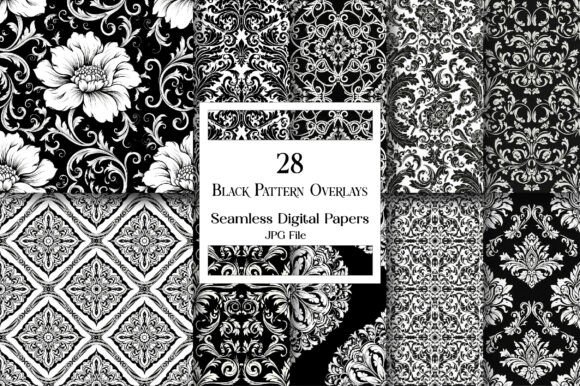
A curated Black Pattern Overlays Pack provides versatility that solid fills cannot achieve. Seamless black textures allow for infinite tiling on large-format prints, while abstract linework adds movement to static layouts. Grunge details introduce a sense of history and authenticity, perfect for brands wanting to avoid a sterile, corporate look. Meanwhile, geometric patterns offer structure and modernity. By utilizing transparent PNG files, designers maintain full control over opacity and blending modes, ensuring the texture enhances rather than obscures the core message.
Elevating Professional Branding and Editorial Design
For marketers and brand strategists, consistency is key, but so is distinctiveness. Black pattern overlays serve as a subtle branding device that can be applied across various touchpoints. Consider a high-end fashion editorial layout; a delicate lace or noise texture overlaid in black can soften harsh studio lighting and add a cinematic quality to the spread. In packaging design, these textures simulate premium materials like matte velvet or embossed paper, signaling quality to the consumer before they even touch the product.
Web designers also benefit significantly from this resource. Pure black backgrounds can sometimes cause eye strain or appear flat on OLED screens. Applying a subtle geometric or grain overlay breaks up color banding and adds necessary micro-contrast. This improves the user experience by making dark-mode interfaces feel richer and more polished. For social media content creators, these overlays provide a quick method to establish a cohesive feed aesthetic. Using the same grunge or abstract texture across Instagram carousels or Pinterest pins creates visual continuity that strengthens brand recognition instantly.
Creative Applications in Art and Personal Projects
Beyond commercial use, black patterns are vital for individual creatives exploring mixed media and digital art. Scrapbookers and digital journalers often struggle with backgrounds that feel too clean or digital. Integrating a distressed black texture grounds the composition, making digital elements feel more like traditional cut-and-paste art. For sublimation and print-on-demand entrepreneurs, these patterns are bestsellers in their own right. A seamless black floral or gothic pattern on fabric creates instant appeal for apparel and home decor products, catering to niche markets that value bold, alternative aesthetics.
Photographers and retouchers utilize these overlays to salvage or stylize images. If a portrait background is distracting, a heavy black grunge overlay set to "Multiply" or "Overlay" blend mode can push the distractions back into shadow, forcing focus onto the subject. Conversely, light leaks combined with black geometric shapes can create avant-garde album covers that stand out in streaming thumbnails. The ability to instantly download high-resolution assets means that inspiration doesn't have to wait for rendering times; the creative flow remains uninterrupted.
Selecting and Implementing the Right Overlay
Not all black patterns serve the same function, and choosing the wrong one can muddy a design rather than enhance it. When evaluating a Black Pattern Overlays Pack, consider the density and scale of the design relative to your project. High-density patterns with intricate details work best for large formats like posters or website headers where the resolution can be appreciated. For smaller applications like business cards or mobile app UI, opt for minimal decorative elements or subtle noise textures that won't compete with typography.
Technical quality is non-negotiable. Always verify that files are high-resolution PNGs with true transparency. Low-quality JPEGs with white backgrounds masquerading as transparent will ruin professional workflows, requiring tedious masking that defeats the purpose of using an overlay. Seamless textures are equally important for scalable projects; visible repeat lines break immersion and signal amateur execution. A versatile pack should include a mix of organic and structured styles, allowing you to pivot between moods without purchasing additional assets.
Practical Workflow Tips for Maximum Impact
To get the most out of black pattern overlays, mastery of blending modes is essential. Simply placing a black PNG on top of an image at 50% opacity is rarely the optimal solution. Experiment with different modes to achieve specific effects:
- Multiply: Best for deepening shadows and integrating texture into mid-tones while preserving highlights. Ideal for adding grit to bright photos.
- Screen or Lighten: Surprisingly useful with black patterns if you invert them first, or when using patterns that have significant negative space to create ghostly, ethereal effects.
- Overlay or Soft Light: Increases contrast and saturation while blending the texture naturally into the underlying colors. Perfect for unifying composite images.
- Color Burn: Creates intense, dramatic contrast. Use sparingly for edgy, high-impact poster designs or metal album art.
Additionally, consider post-overlay adjustments. After applying your black pattern, use a curves or levels adjustment layer clipped specifically to the overlay. This allows you to fine-tune the texture's visibility independently of the base image. You might want the pattern visible only in the shadows, or perhaps faded out in the center to keep text legible. Masking is another powerful technique; use a soft gradient mask to fade the pattern toward the edges of the frame, creating a natural vignette effect that draws the eye inward.
Enhancing Communication Through Visual Depth
Ultimately, the goal of using Black Pattern Overlays is to improve communication. Texture acts as a non-verbal cue that sets the tone before a single word is read. A sleek, linear geometric pattern communicates technology, precision, and forward-thinking innovation. A rough, ink-splatter grunge texture communicates rebellion, raw emotion, or vintage authenticity. By consciously selecting patterns that align with your narrative, you reduce cognitive load for the viewer; the visual style reinforces the textual message rather than contradicting it.
Efficiency is another tangible benefit. Creating custom textures from scratch involves scanning physical media, cleaning up artifacts, and digitizing assets—a process that can take hours. A professionally curated pack compresses this timeline into seconds. For freelancers and agency teams working under tight deadlines, this efficiency translates directly to profitability. More time spent on concept and refinement, less time on asset generation, leads to superior final deliverables. Whether you are designing a wedding invitation suite, a tech startup landing page, or a personal zine, black pattern overlays provide the foundational texture needed to turn good designs into memorable experiences.