Evaluating Glitter Gold Metallic Wood Digital Paper for Professional Design
In the realm of digital asset creation, finding textures that balance organic warmth with modern elegance is a persistent challenge for designers and crafters alike. Glitter Gold Metallic Wood Digital Paper represents a specific niche within surface design, merging the structural familiarity of timber grain with the celebratory luminance of metallic gold. This combination serves a distinct functional purpose in visual communication, offering a background solution that implies luxury without sacrificing readability or versatility. For professionals ranging from freelance graphic designers to small business owners managing their own branding, understanding the practical application and technical specifications of this asset type is essential for maintaining workflow efficiency and aesthetic consistency.
Visual Characteristics and Texture Fidelity
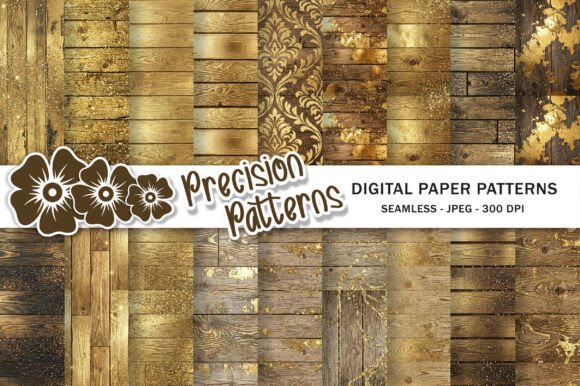
The primary value proposition of Glitter Gold Metallic Wood Digital Paper lies in its ability to simulate complex physical materials in a two-dimensional digital space. Unlike flat vector patterns, high-quality digital papers in this category rely on rasterized texture mapping to convey depth. The wood grain provides a directional flow that can guide the viewer’s eye across a layout, while the glitter and metallic overlays introduce specular highlights that react visually to contrast. When evaluating these assets, it is important to distinguish between genuine texture synthesis and simple noise filters. Effective metallic wood papers retain the irregularity of natural knots and grain lines beneath the shimmer, preventing the design from appearing artificial or overly repetitive.
This specific aesthetic bridges the gap between rustic and glamorous, making it particularly effective for projects that require a sense of occasion grounded in natural elements. The gold tone must be calibrated correctly; a hue that is too yellow can appear cheap, while one that is too pale may lose its metallic identity against white text. In professional use, the best iterations of this digital paper offer a balanced saturation that allows for color grading or blending mode adjustments in post-production without breaking down the underlying texture integrity.
Technical Specifications and Workflow Integration
For any digital asset to be viable in a professional environment, its technical foundation must support rigorous editing standards. This collection includes 18 unique digital papers, providing sufficient variety to create cohesive suites for multi-page documents or coordinated product lines without obvious repetition. The files are delivered in JPEG format at 300 DPI (dots per inch), which is the industry standard for high-fidelity printing. This resolution ensures that when used for physical outputs like packaging or invitations, the glitter details remain crisp rather than pixelated.
The native size of 12″ x 12″ warrants specific consideration regarding scalability. While this dimension is optimized for scrapbooking and standard card stock, professionals working on web banners or large-format signage must evaluate how the texture holds up when resized. Because these are raster images, scaling beyond 100% will result in interpolation. However, for most digital applications such as social media graphics, blog headers, and planner stickers, the 12-inch canvas provides ample pixel density. Users should note that while easy to resize with different software, maintaining aspect ratio and utilizing smart objects in programs like Photoshop or Affinity Photo is recommended to preserve edge definition during transformation.
- File Format: JPEG (High compatibility across Adobe CC, Canva, Procreate, and Silhouette Studio)
- Resolution: 300 DPI (Print-ready quality)
- Dimensions: 12″ x 12″ (Standard square format)
- Quantity: 18 Unique variations per set
- Delivery: Immediate digital download (No physical product)
Practical Applications Across Creative Disciplines
The versatility of Glitter Gold Metallic Wood Digital Paper extends well beyond traditional scrapbooking. In commercial graphic design, these textures function as sophisticated backdrops that add tactile interest to otherwise flat layouts. For wedding stationery designers, the metallic wood aesthetic aligns perfectly with current trends favoring "organic luxury," serving as an ideal base for birth announcements, save-the-dates, and reception signage. The texture adds weight and formality to typography without competing with intricate calligraphy or serif fonts.
Digital marketers and content creators also find significant utility in these assets for social media engagement. Platforms like Instagram and Pinterest prioritize visually rich imagery, and the reflective qualities of gold metallic textures tend to perform well in thumbnail environments. When designing website backgrounds or blog headers, however, users must exercise restraint. The high-contrast nature of glitter can interfere with body text legibility. Professional best practice involves using these papers as accent elements, section dividers, or behind darkened overlay layers where white text requires sufficient contrast ratios to meet accessibility standards.
For entrepreneurs selling physical products, these digital papers translate effectively into packaging design. Creating custom thank-you cards, box liners, or sticker backing sheets with this texture elevates the unboxing experience, reinforcing brand perception through perceived material value. Since the file is digital, small business owners can print these designs on demand, reducing inventory costs associated with pre-printed specialty papers.
Evaluating Usability and Asset Management
Immediate availability is a critical factor for professionals operating on tight deadlines. The instant download model eliminates shipping wait times, allowing for seamless integration into active projects. However, because no physical product is included, color accuracy becomes a variable dependent on the user's hardware. Metallic gold is notoriously difficult to reproduce consistently across different monitors and printers. Professionals should always conduct test prints when using Glitter Gold Metallic Wood Digital Paper for physical deliverables to ensure the output matches client expectations. Screen calibration and printer ICC profiles play a significant role in achieving the intended warm, reflective tone.
Organization is another aspect of usability often overlooked. With 18 unique files, establishing a clear naming convention and tagging system upon download prevents workflow friction later. Renaming generic filenames to descriptive tags (e.g., "GoldWood_Glitter_DarkGrain_01") facilitates faster retrieval when building mood boards or template libraries. For those using template-based software like Canva, uploading these assets to a dedicated brand kit folder ensures they remain accessible across multiple team members or client accounts.
Audience Fit and Strategic Considerations
While aesthetically appealing, Glitter Gold Metallic Wood Digital Paper is not a universal solution. It is specifically suited for audiences aged 20–50 who are engaged in creative production, whether professionally or as serious hobbyists. Freelancers and agencies will appreciate the cost-effectiveness of a digital license compared to sourcing and photographing real metallic wood surfaces. Educators and publishers may find it useful for certificate design, award presentations, or special edition book covers where a premium feel is required.
However, users seeking minimalist, corporate, or tech-forward aesthetics may find the ornate nature of glitter wood distracting. It is inherently decorative and carries strong associative meanings related to celebration, tradition, and femininity. Before purchasing, evaluate whether this semantic load aligns with your project goals. Additionally, those requiring seamless tiling patterns for large-scale web backgrounds should verify if the edges of these 12x12 papers match, as many digital papers in this style are designed as standalone compositions rather than repeating tiles.
Ultimately, the decision to incorporate Glitter Gold Metallic Wood Digital Paper should be driven by specific design needs rather than trend adherence. When utilized with intention, it offers a reliable, high-resolution resource that enhances visual storytelling. Its strength lies in its duality: providing the structure of wood and the allure of gold in a flexible digital format. For creators looking to add tangible richness to their digital or print portfolios, this asset class delivers measurable value through time savings, aesthetic elevation, and broad application potential. By understanding both its capabilities and its limitations, professionals can leverage these textures to produce work that resonates with audiences seeking warmth and sophistication in an increasingly digital landscape.